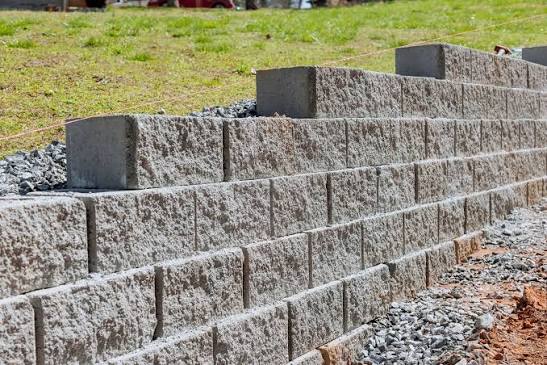
Retaining walls have it pretty rough. It traps soil and helps to form usable terraces on hilly terrain. But there is a different kind of trouble-maker: the water.
If your wall appears to have no weep holes, you might think the wall was constructed wrong. The response may not be an easy one. Some drainage systems may be used by some walls, however, a wall that has no workable way to release water will constantly come under extreme pressure as time goes on.
Why Do Retaining Walls Require Drains?
Soil becomes saturated and heavier. Hydrostatic pressure can be caused by water trapped behind a retaining wall. That pressure has to go somewhere, so if it does not have anywhere else to run then it pushes against the wall.
Over the years bad drainage can lead to:
- Cracks or bulging
- Leaning or movement
- Dampness and erosion
- Damage to joints
- Partial or complete wall failure
And this is why drainage should be part of the design, not an afterthought.
How Do Weep Holes Really Work?
Weep holes are tiny gaps constructed in a retaining wall. They offer a path for water that has become trapped behind the wall to be released.
Mouldings are typically placed on the bottom part of the wall where water tends to pool. But just because it has holes doesn’t mean good drainage. What does this mean? They can be blocked by soil, roots, or debris.
A well-designed wall can also employ a tile drain, gravel backfill, or combination thereof. So, just because a wall has no weep holes visible to the naked eye does not mean it is unsound.
When Should You Be Concerned?
Inspect the area around and behind the wall after rainfall. If water repeatedly collects behind the wall, or there are stained spots and soil displacement, the drainage system must be broken.
Your wall that begins to lean, cracks appear in new locations, separated areas, or bulging along the face are all other warning signals.
Do not drill holes randomly into the wall by yourself. You can destroy hidden services or at least reduce its structure.
The Wall Design Makes a Huge Difference
Whether or not drainage is necessary will be determined by the height and material of your wall, soil type, groundwater conditions, and site slope. What a small garden wall wants is different from what a tall structure containing lots of soil needs.
Seasoned contractors dealing with retaining walls in Mount Waverly ascertain the location and decide on how water must be dismantled behind the wall.
Depending on the conditions, drainage aggregate, agricultural pipe, filter fabric, or other measures may be recommended.
Now What If the Wall is Already Built?
When, and only when, there are no weep holes provided, do not conclude upon an immediate failure is most likely if the wall has held up substantially intact for some time without clear indicators of problems. Instead, get it inspected, especially if the site has heavy rainfall or inadequate drainage.
If you are a homeowner struggling with an old or poorly drained structure, retaining walls professionals will be able to tell you if a drainage improvement is needed or not.
It may be a solution with better surface drainage than modifying the wall.
Don’t Ignore Water Pressure
Your retaining wall does not have to visibly crack all the way through before there is an issue. The build-up of water pressure exerts more pressure on the structure.
If the weep holes on your wall are missing, verify whether another draining system exists. Before making the changes, if you are not sure, you should seek professional advice.
For retaining walls to be effective, they have to hold back both soil and water. Similarly, correctly designed retaining walls in Box Hill need proper drainage to be stable and serve their purpose throughout the years.